


As more and more people are drawn to mountain biking, more and more cyclists are off MTB touring, looking for that perfect harmony between biking and camping. Mountain bikes have taken camping to a whole new level by being able to cover more distance and carry more gear in an adventure that is truly over the top.
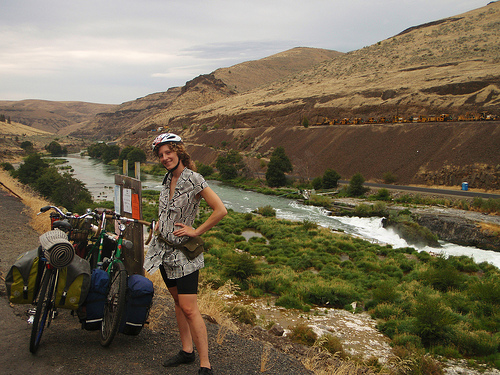
MTB touring is an exciting way to escape the summertime crowds on mountain trails or engage in a full-expedition over a few weeks. Either way, your camping holiday should be planned wisely. Here are just a few points to keep in mind before you get on the bike and set out on the trail:
The Bike
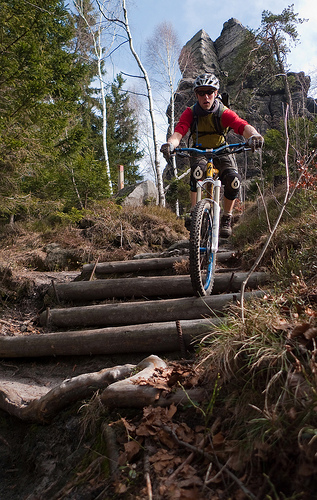
The most essential component and your means of transportation should be carefully studied. There are many different kinds of mountain bikes on the market that perform different functions. If your goal is to travel longer distances over more technical terrain, a front suspension fork is crucial. Your shoulders and wrists will thank you for the extra cushion.
A full-suspension mountain bike is not necessary and is almost a hindrance on an advanced trail. Having a rigid back end of the bike means having every pedal stroke transfer into forward motion.
In addition, full-suspension bicycles have more parts and more chances for things to break. Stick with the front suspension: it’s cheaper, more efficient and has less problems then a full suspension mtb. In addition, stick with a frame that is either steel or titanium: both of these materials are tough and absorb shock better than a stiff aluminum frame.
Gear Transport
If you are planning cycling holidays which include longer tours and an MTB is your bike of choice, there are three different ways to carry your gear: trailers, panniers or ultra-light.
Trailers make a nice option since they are light and take a lot of the weight off of the bike (and your back). The Ibex from BOB Trailers for example, allows you to carry up to 30kg effortlessly over rough terrain.
The trailer’s suspension system eases out the obstacles in the road and maneuverability is a breeze. However, you are still towing a trailer. So knowing how to corner and descend becomes even trickier with extra weight behind you.
Which is why many people opt for panniers. Panniers have become ultimately bomb-proof over the past decade with better fittings and waterproof material. They fit snugly on racks to keep a neat, compacted bicycle unit. You need to make sure your bike has the front and/or rear mounts for the racks (which could be an issue since many high-end mountain bikes do not come with this feature).
Over difficult terrain, you’d want to make sure the racks are bolted onto your frame and fork. Don’t lash them down since these lashes are bound to jar loose.
My preferred preferred method of travel is to go ultra-light. A well thought-out pack contains everything necessary: food, a change of clothing, a compression sac with sleeping bag and shelter, first aid kit, bike repair kit and a credit card. That’s it. The whole bag should weigh around 8kgs and can fit on a rear rack.
Keep in mind that traveling ultra-light means having a reduced amount of gear with you. As a result, it shouldn’t be attempted if this is your first time MTB touring and definitely shouldn’t be attempted if you are planning a trip in a remote area.
Test your methods near your house with a simple 3-day camping trip and then you’ll start to get your own rhythm. Whatever you do, don’t stuff a backpack full of gear and throw it on your back and start biking. This is a great way to spend a lot of time at your chiropractor’s studio and urologist’s office.
Other considerations
Shoes: switch out your stiff racing shoe for a more flexible and comfortable MTB shoe. You’re bound to be walking on them at some point during your trip.
Brakes: if you have (or can afford) disk brakes, go with them. The amount of weight you’ll carry is a lot of stress on rim brakes and they are simply not as efficient. Disk brakes are a great asset and (with a little instruction) are easy to fix when in a pinch.
Gearing: if you see a lot of gnarly climbs, you’ll want a sweet gear-ratio to get up and over those hills with all that weight. Make sure you’re equipped with a 28T on the back and a 20T as your triple.
Study: get onto online forums, read the material, talk to people about where you’re going. And get your bike ready to ride through your local bike mechanic to reduce mechanical problems in the back country.


