


For a beginner, the amount of different kiteboarding kites on the market can be confusing! In this guide we walk you through the virtues of the difference kites and their terminology. Including the differences of Bow kite vs C kite.

The different kiteboarding kites
Bow kite vs C kite? LEI (Leading Edge Inflatable kites)? High aspect ratio? One pump inflation? Bridles?
All of the technical terms can be overwhelming for a novice. When I first got into the sport, I just wanted someone to break down the basics so I could understand the different kiteboarding kites and make an informed decision on what type of kite to buy.
Now, years later, I could write a short book about kites. But, I’ll do my best to shed some light on this confusing topic within this article.
Foil vs inflatable kites
To look at the different kiteboarding kites you need to understand there are two basic families of kites that are suitable for kiteboarding:

- Foil kites
- Inflatable kites
Foil kites:
Foil kites are different from inflatable kites in that their leading edge is not inflated. Rather, they have open chambers that allow airflow into the foils, filling the sail. Foil kites also lack inflated struts that characterize inflatable kites.
Training kites are usually foil kites. Many people use foil kites for snowkiting, as they don’t have to be pumped up in cold weather.
Some people use foils for water kiting. Foil kites are very stable and have incredible lift for jumps. The downsides are their slow turning speed and difficult water relaunch. They do better in light wind sailing, as they’re lighter than a typical bow-kite.

Inflatable kites:
Inflatable kites have about 95% of the kiteboarding market share. An inflatable kite is different from the aforementioned family of foil kites because of its inflated leading edge and struts.
I hope this does not confuse you, but within this family of kites, there are two different designs:
- C-shaped kites
- Bow kites
Bow kite vs C kite
C-shaped kites:
This family of kites gets its name from the rectangular outline of the sail. Basically, they’re the really skinny (long and narrow) kites that when inflated, have a defined “c” shape.
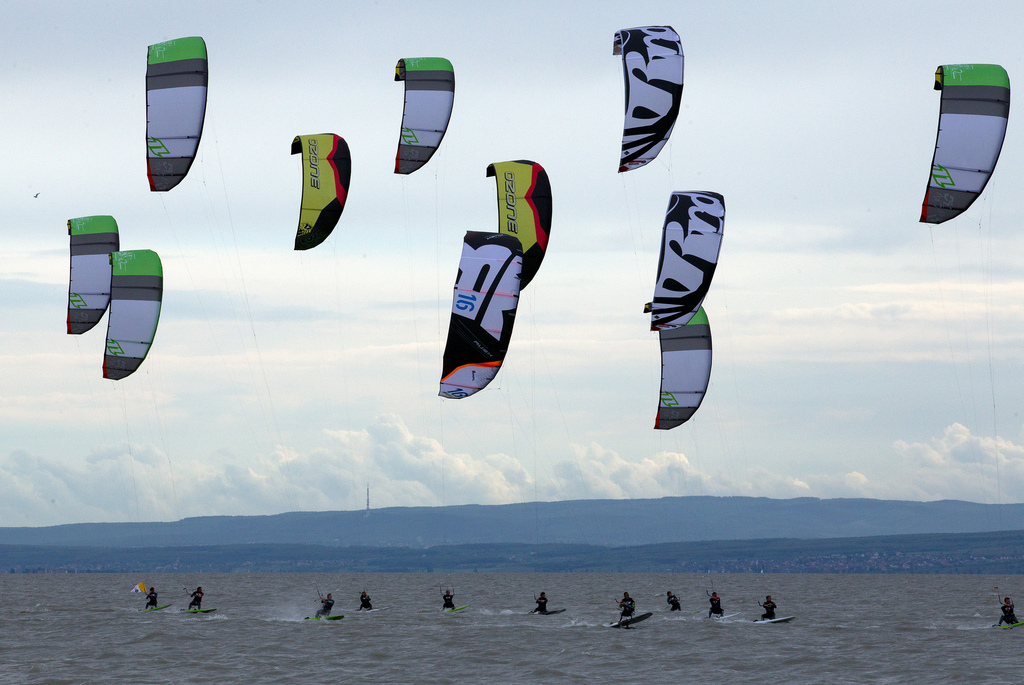
Both the front and back lines are closely attached to the chopped wingtips. Unlike bow kites, they do not have any bridles.
As a rule of thumb, c-kites are much faster to turn than bow-kites and fly more forward in the wind window. Hence, they’re better for riding upwind and they tend to produce higher and loftier jumps than bow kites. Most of the massive kites loop riders prefer c-shaped kites for this reason.
When considering Bow kite vs C Kite, it is important to realise that C-kites are more designed for advanced riders for a few reasons.
Firstly, they are harder to relaunch after a crash.

Secondly, they have significantly less depower, which can be sketchy for new riders. They also have less wind range than bow kites, which means that you’ll need more kites. 9 in 10 riders use bow kites, but c-kites will remain choice for certain old school and advanced riders.
Bow kites:
Far more popular than c-shaped kites are the hot-selling bow kites. Since approximately 2007, bow kites have flooded the market and made it much easier for new students on their first kiteboarding trips to learn the sport.
There are plenty of subcategories of bow kites but for the sake of being brief, I’m going to generalize. At a glance, bow kites appear much shorter and fatter, than c-kites. Another notable feature is wingtips that are more swept and tapered than c-kites.
Bow kites are slower, and they don’t jump as high. However, they’re more stable flying in the air and they relaunch with ease. If the wind gusts while riding, bow kites allow a rider to simply push the bar away – causing the kite to lose power. This is an important feature in a learner kite. That being said, some of the world’s best riders choose bow-kites.

So if you’re getting into the sport, chances are that you’re going to be looking for a bow-kite. I’m also super pumped for you to be learning the best sport in the world!
I hope this brief explanation will offer a bit of clarity in helping you to understand the different kiteboarding kites on the market.
Thanks to ex-pro kitesurfer Mark Moore for explaining kitesurfing kites. If you are planning a kiteboarding holiday or to take lessons then check out our kitesurfing discounts – you could save a fortune!


Thank you for your explanation.
I suggest that you inset pictures comparing C and bowl kites and tell examples to help us to choose.
(Sorry for my poor English)
Thanks – as the article says most people use inflatable bow kites. Some other pics would not go amiss but nearly everyone uses inflatable bow kites. The article does give examples of when people use the other types though.
Thank you so much for your Article. I am learning kiting and the big selection of Kites has overwhelmed. You have brought light into this dark ess. ❤️
Glad to have helped!