


Ever considered learning martial arts in China? Well Chinese kung fu adventures are the best way to take up this ancient form of self defence.
Chinese martial arts (kung fu) are over 4,000 years old. Based on the ancient belief systems of one of the world’s great civilisations, their styles and techniques are now embraced all over the world.
By learning martial arts in China you will improve your physical and mental discipline, as well as your health and spiritual knowledge.

There are schools based amid the jaw-dropping lakes and canyons of China’s Fujian Province run by certified Kungfu Masters and Shaolin Monks. We recommend those run by the Rising Dragon School.
Chinese kung fu adventures
Anyone who thinks that kungfu is simply about fighting, think again. It is an entire philosophy, a way of life, grounded in the pre-Buddhist religion of Taoism (‘the way’). The Taoist seeks to understand the interconnectedness of every aspect of existence and to live in harmony with the natural world.
The good life is a balance of oppositions; of Yin (black/dark) and Yang (white/light). Kung fu helps us to maintain this equilibrium within ourselves by channelling Qi, the life force that drives and defines the world.
Wude (martial morality) is another important tenet of kung fu, especially shaolin varieties. By behaving respectfully, kindly and wisely towards oneself and others, one will achieve both ‘morality of mind’ and ‘morality of deed’.
Learning martial arts in China
So how exactly do these ancient ideas influence the practice of kung fu? A stay at a martial arts school in China, will reveal all.
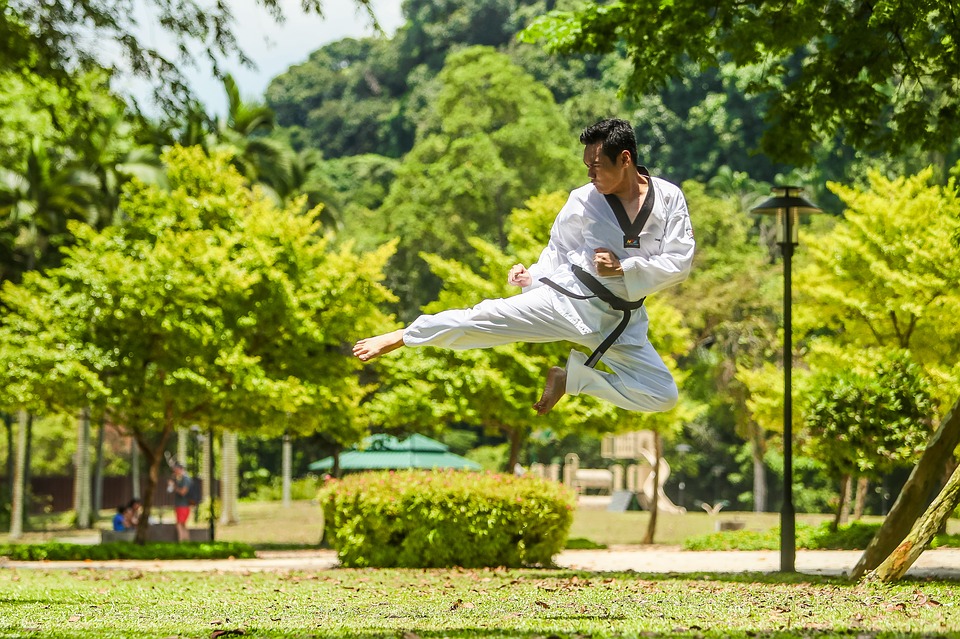
Through careful control of your breathing, you can harness your Qi to boost your internal willpower, physical strength and mental well-being.
Greater understanding of your own body and its relationship to nature allows the identification of pressure points that perfect your reflexes and help you to defend yourself in a combat situation.
Yin and Yang
There are Yin (soft) and Yang (hard) techniques in martial arts that can be deployed strategically against a given opponent.
When learning martial arts in China, meditation is vital for attaining a state of mental clarity and focus. Mastering certain stances is also key to preparation, and demands effective weight distribution, posture, body alignment and foot position.
During Chinese kung fu adventures, students must build up the flexibility and robustness of his or her muscles to advance through each level of a given school or style.
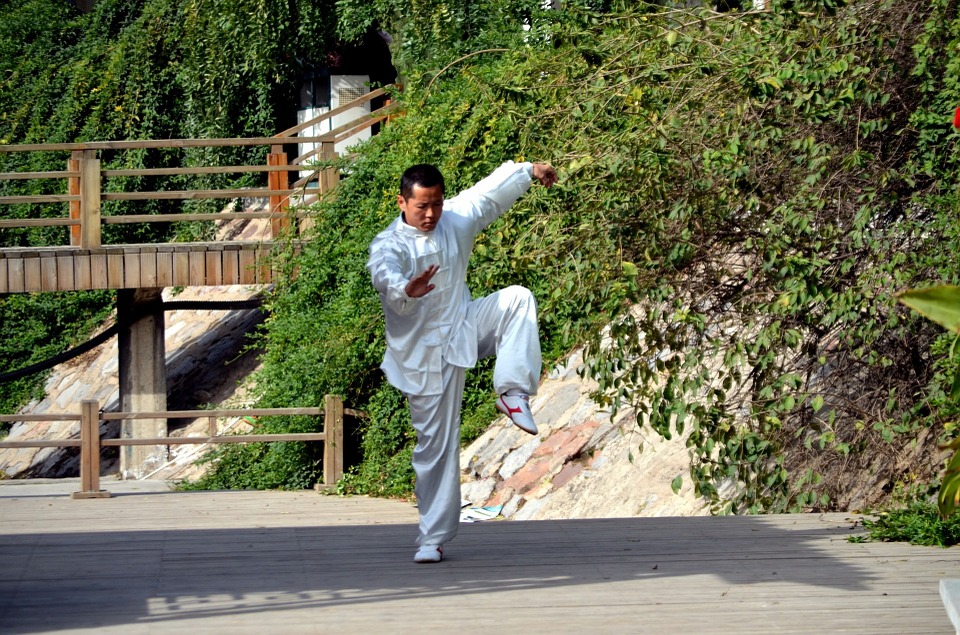
Different kung fu adventures in China
There is a dizzying plethora of kung fu styles, each of which emphasises specific techniques. They are categorised into pai (sects), jia (families) and men (schools).
There is also a geographical divide between styles. In the north of China, you’ll tend to find fast-paced acrobatics and powerful kicks. The south is characterised more by firm stances, quick footwork and shear strength.
Tai Chi
With its elegant compromise between yielding and attacking, Tai Chi (‘supreme ultimate fist’) aims to defend against ‘hard’ assaults by using subtle, ‘soft’ methods. It is perhaps the healthiest of all kung fu styles. It is proven to lower blood pressure, reduce anxiety and strengthen the heart.
Basic Tai Chi training comprises Quan, a series of slow and precise bodily movements requiring measured breathing and spinal straightness. This prepares you for hand-pushing exercises with a partner, during which you learn coordination, poise and balance.
Shaolin
Shaolin schools have been made famous by numerous books, movies and computer games. In the 5th century AD, at one small temple in Henan Province, Shaolin monks created the first eighteen moves of kung fu.

Initially it was as a form of exercise that assisted the flow of Qi. Later on these moves were adapted for combat, evolving into chops, kicks, whirling stances and bare-handed rock-smashing.
Fujian White Crane
Thought to have developed from one woman’s observations of the movements of cranes. The Fujian White Crane is perhaps the most important of all southern Chinese martial arts.
Pressure points are essential to this form. You must identify your opponent’s weak points and exploit them through fluid triangular footwork and close-quarters fisticuffs. You must also master the art of brief bursts of breath.
Should I learn martial arts in China?
Given their physical and psychological demands, Chinese martial arts can take a lifetime to master. The journey will be a long one but learning martial arts in China is a great place to begin.
Interested in other Martial Arts? Then check out FMA in the Philippines.


This is a test comment This is a test comment This is a test comment
Shaolin Temple China attracts foreign friends from all over the world with its deep cultural heritage and unique practice. They come here from far and wide in the hope of drawing wisdom from traditional Chinese culture, learning Shaolin Kung Fu and experiencing the charm of Shaolin meditation.