

Choosing the right walking boots is all about suitability. Firstly, and most importantly, you need to make sure that whatever type of walking footwear you choose you get a good fit. But there are a number of different styles of footwear and you need to match your choice to your walking ambitions.

Types of walking footwear
- Trekking sandals
- Trainers/Sneakers
- Walking shoes
- Wellies
- Light weight hiking boots
- Heavy weight trekking boots
- Mountaineering boots
- Polar boots
What type of walking footwear should I buy?
Think about what kind of walking you’re going to be doing. Gentle strolls through the woods are very different to multi-day mountain trekking and, not surprisingly, they require different footwear.
We’ve tried to break down the varying types and styles of boots and shoes below, starting at the lighter end of the spectrum and working upwards. Locating your place on the scale should help you to buy the most suitable footwear.
Trekking sandals
Lightweight, breathable and flexible, walking sandals are suited to warm weather walking where wet ground, or critters such as leeches, are not a problem. They’re great for gentle walks on firm ground and normally have less support and grip than other walking footwear.
Conversely they are also popular for amphibious walking where you are often in and out of the water, as they are quick drying and often designed to get wet. They’re also light-weight so easy to transport making them great for camping, festivals, or multi activity holidays.

Trainers/Sneakers
There is nothing wrong with pulling on a pair of trainers (sneakers for our North American readers) for shorter or even mid length walks. Although they vary a great deal, a pair of men’s low top sneakers would only be suitable for a stroll on even paths and nothing technical, while trail running trainers would be fine for most hiking holidays.
Key to how good trainers and sneakers are as a type of walking footwear is how supportive they are. Flat soled trainers that are designed to look good tend to offer less support than those designed for running or other sports. However, if you have some sneakers you can ware walking all day in a city you can wear them all day on non technical trails.

Walking shoes
There’s a theory that every pound on your foot is equivalent to five on your back, which is why lightweight walking shoes are very popular. Like a cross between a shoe and trainer, a lightweight walking shoe is low cut with flexible midsoles that are ideal for medium grade day walks.
Walking shoes are often designed to be multi-use and so suitable for a number of other outdoor activities. You’ll often see people wearing them around town, or down the pub as they are suitable for any occasion. A valuable addition to any shoe collection. 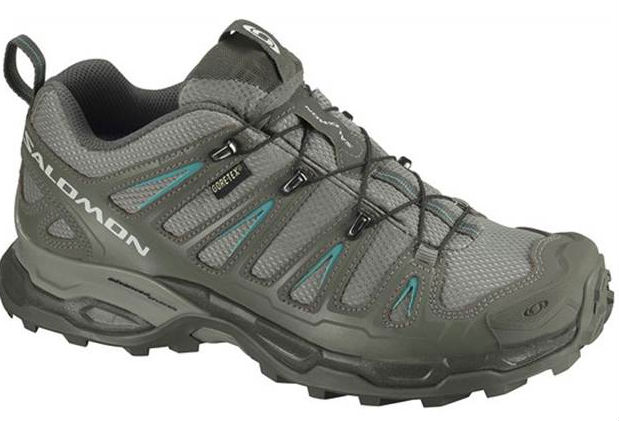
Wellies
The classic wellington boot is still a popular choice with walkers because of the versatility and waterproof protection it provides. Offering almost knee high coverage, and with a variety of sole types to choose from depending on use, the wellie offers great protection in wet weather.
On the downside wellies can get pretty sweaty and socks in wellies are highly susceptible to going to sleep (falling down). Ultimately they are ideal for walking the dog but not suitable for long distances.

Light weight hiking boots
Usually mid cut boots (but sometimes high cut), these are essentially bulkier versions of the walking shoes mentioned above. Suitable for long day hikes and weekend excursions, you trade off a bit of weight for a more durable and sturdy sole.
Hiking boots may require some breaking-in to get the desired amount of flex in the bottom section. So don’t try and use them straight out the box for a serious excursion. Having said that these Inov-8 Roclite Pro G 400 were great straight out of the box.

Heavy weight trekking boots
Designed specifically for walkers carrying heavy loads, multiple day trips and more difficult terrain. These boots are durable and supportive with stiffer midsole than any of the above styles. They are also normally very waterproof.
This makes them suitable for off trail travel and demanding terrain. But they normally require some serious breaking in before a trekking holiday.

Mountaineering boots
Weighty boots with tough, supportive and durable outsoles. These boots are designed to carry heavy loads and also support climbing crampons for glacier and ice travel.
They’ll be completely waterproof and often have good thermal properties to keep your tootsies warm and dry. But complete overkill unless you’re a serious alpinist.

Polar boots
Very high cut, polar boots are heavy-duty exploration footwear for serious expeditions in hostile conditions. Aimed to keep your feet warm and dry, whilst being simple to do up – you don’t want to be taking your gloves off in the Arctic.
Often the materials used are specially chosen to be able to withstand extreme cold as the last thing you need is an equipment malfunction when it is 40 below. They are a little like highly technical – and very expensive – wellington boots, but not something you be walking the dog in.

Types of walking footwear: Conclusion
So, hopefully this answers the ‘What type of walking footwear should I buy?’ question. With options from sandals to polar boots it depends what kind of walker you are, hopefully we have made the decision making process that little bit easier for you.
Of course you may do a lot of different types of walking in which case it may be necessary to own more than one type of walking footwear. But if you want one pair that does it all and is great for adventure travel then walking shoes are probably the best choice, especially as many also look good enough to wear around town.
If you’re in the market for new walking footwear then check out E-outdoor.co.uk who offer a wide range of styles from well known brands.


