

There are one or two obvious differences between snowboarding and skiing. But one which is less apparent involves demographics. Participation in skiing has an relatively even split between the genders, but snowboarding is still male dominated, so how do we get more women into snowboarding?
Figures vary slightly, but about thirty percent of snowboarders are women. As a female rider, this statistic has often been my reality on the slopes. In fact, the very first course I ever attended in the mountains, in Chamonix, I was the sole woman in a group of ten men.

Ways to get more women into snowboarding
There are a myriad of reasons for this difference, but what can be done to get more women into snowboarding?
Focus on the benefits not risks
Snowboarding is an extreme sport, and this very label can discourage women. Particularly if their only experience is watching snowboarding on TV, seeing competitors hurl themselves over massive kickers or race at break-next speed through a boardercross course.
We need to convince women that this isn’t all snowboarding entails. To enjoy the sport, no one has to speed at the edge of control or even leave the ground. No one has to be brave or super-human fit.
How about promotion of the health benefits of snowboarding? The inspirational wonder of experiencing some of the planet’s most beautiful scenery, the feel-good factor of hanging with your friends and the ability to switch off from everyday stresses and worries?
What about the chance it gives riders to be part of a wider community, an inclusive, free-spirited, welcoming place to play?
Deal with fear and de-mystify dangers
Stepping out of our comfort zones into unfamiliar territory can be frightening, particularly with a combination of learning a new skill in an alien environment alongside strangers. Women need to see that the benefits of picking up a snowboard outweigh the risks of strapping in.
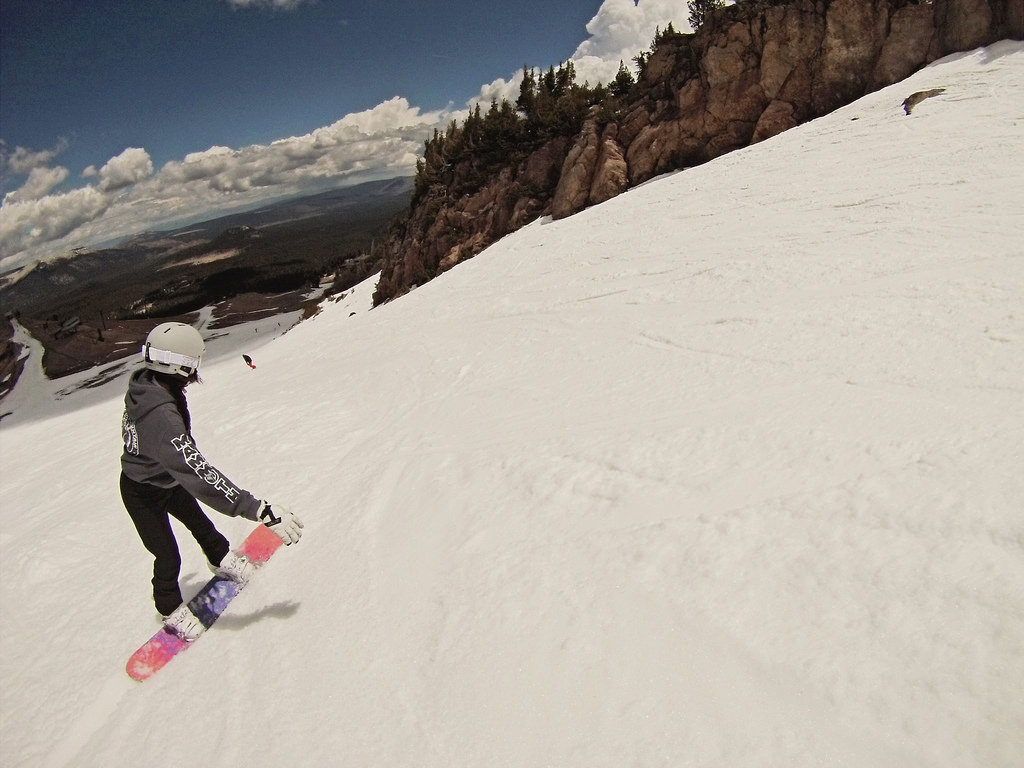
We must communicate that various levels of risk exist within the sport. Riding a blue slope on a sunny day wearing protective clothing is not the same as heading into the backcountry, with no safety equipment when a storm is brewing. Reassuring women how to snowboard safely and how to learn in a stepped approach will allay fears.
The role of the media
Social media and the internet allow far more access to bespoke information, so people looking for female snowboarders will find them. However, to appeal to women in wider society there is a reliance on traditional media outlets, all of which have a solid place to promote female snowboarding.
Unfortunately, images and copy are overwhelmingly male-orientated. Some may say this is a reflection of the gender-split in the sport, but unless female viewers and readers can identify with those depicted they are less likely to pick up a snowboard.
Recent research has shown that women’s sport, in general, receives less coverage than their male counterparts. In this Winter Olympic year, snowboarding will feature in mainstream media – often the only time the sport is shown to large audiences – helping to get more men and women into snowboarding. But there needs to be equal air-time for the men’s and women’s events.
Female snowboarders: Role models
Good role models inspire us to step-up and push further. When I first started riding the pro-female snowboarders were conspicuous by their relative absence.
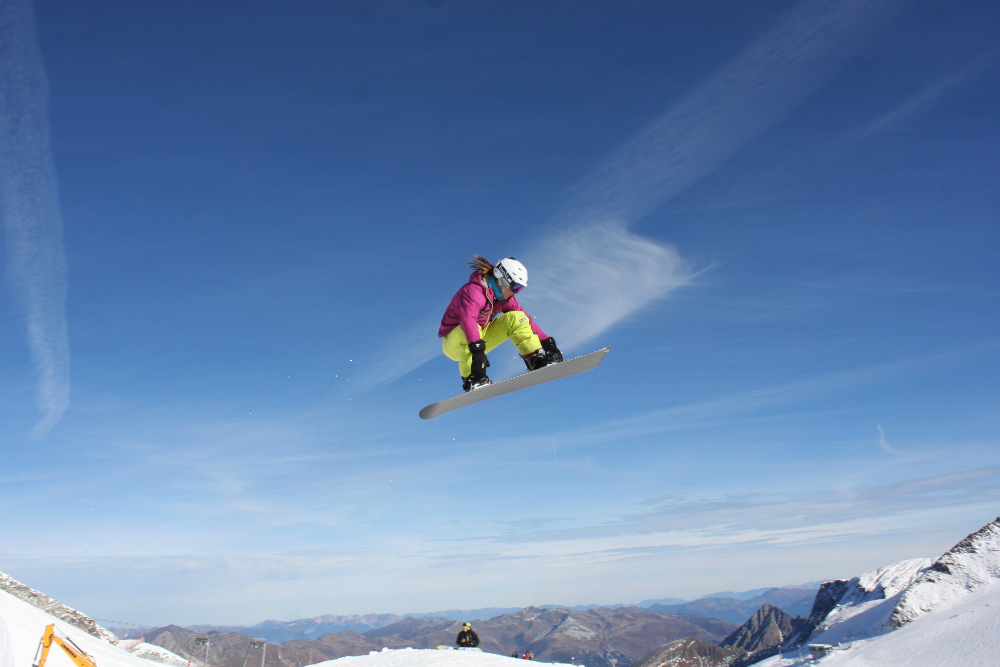
This is now changing with more women visible at the highest level. Including the UK’s Olympic Bronze medallist, Jenny Jones alongside current professional snowboarders, Aimee Fuller, Katie Ormerod and Zoe Gillings-Brier.
More female instructors
Women learn differently to men. Research has shown that neuronal pathways in women’s brains are connected differently to their male counterparts.
As a result, women are generally more social, possessing better listening skills. Within the sphere of learning they generally absorb information sequentially rather than experientially, by listening first, then doing. So they are suited to working with an instructor and female instructors will instinctively understand female students.
Female-specific gear
Challenges to the traditional clothing suppliers who “shrink it and pink it” are being driven by women-owned companies who have forced larger organisations to examine their attitudes. Companies such as the UK’s, Snooks now provide snowboard clothing designed by female snowboarders.
I know women who still resort to buying men’s gear because they do not fit into the ubiquitous small sizes. We do not want women to give up before they even begin. Offering a choice of clothing in sizes that fits us all, no matter what our shape or size, will help get more women into snowboarding.
More women into snowboarding: Conclusions
Everyone has their part to play. From commercial organisations to the various media platforms, and professionals male and female snowboarders to the government. And even you, reading this post.
If we want to get more women into snowboarding to fully embrace our sport, then we need to help them to see the benefits of riding. Allow them to overcome their fear of the unknown and to reach out to a wonderful sport.
But this is not enough – we must also encourage them to stay in the sport, long after they first pick up a snowboard. They need to feel part of something bigger than themselves.
Thanks to Kate Mackay author of ‘Taking It All On Board: 8 Steps To Mastering The Slope & Life With Confidence,’ available from www.takeitallonboard.com and the blog, www.mummysnowboarder.com for these ideas of how to get more women into snowboarding.


