

Are you looking for an alternative to trekking Kilimanjaro? Then the Mount Meru trek in Tanzania is the perfect option. It is cheaper, easier (but still challenging) and better in many ways.

Why an alternative to trekking Kilimanjaro?
Kilimanjaro has become the byword for celeb charity treks. Everyone from Cheryl Cole and Chris Moyles in 2009 to Shirley Ballas and Ed Balls in 2019 has tackled its slopes. Yet there’s nothing glamorous about it.
‘Kili’ towers above the barren landscapes and mist-shrouded slopes of Tanzania. It is Africa’s highest mountain, reaching a heart-thumping 5,895m. It is a challenging climb and a rewarding achievement.
You’ll battle extremes in altitude, unpredictable weather and aching limbs. However, due to it’s popularity it is expensive. The Kilimanjaro park fees are $70 a day and $50 per night to camp, so come to over $800. No wonder the whole trip often costs more than $2000.
What is Mount Meru?
Crowning the nearby Arusha National Park, little-known Mount Meru rises 4,565m above the terra firma. Only 60 km from Kili it is surrounded by iridescent streams, montane forest and the fragrant scent of heather.
A spectacular volcano, its height once exceeded that of Kilimanjaro. But after an aggressive eruption obliterated the tips of its eastern slope, around 8,000 years ago, Meru’s peak was much reduced.
That doesn’t make a Mount Meru trek in Tanzania any less thrilling though. Densely forested around its base, the mountain’s vegetation soon turns to barren volcanic rock, exposing far reaching views across Tanzania.
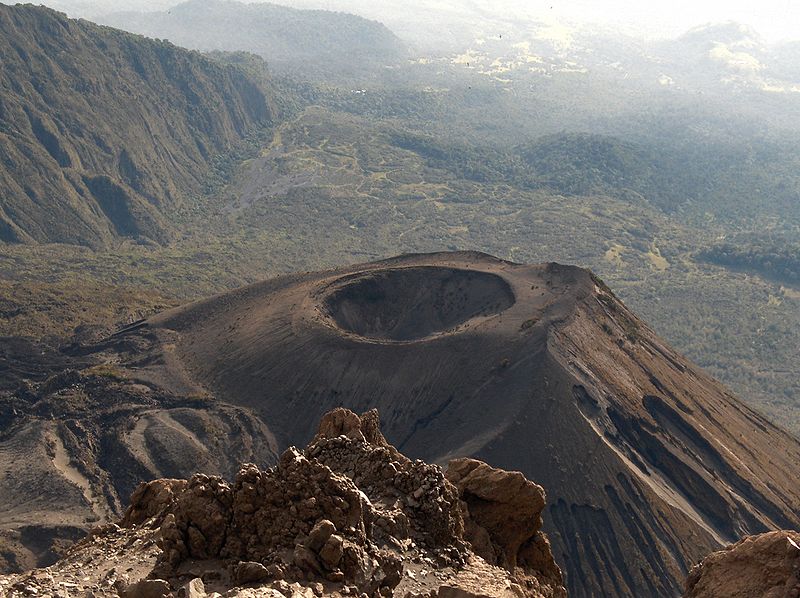
With wild forest reaching into intriguing bunches of clouds it is a beautiful mountain. And the best views of the mighty Kili are your reward.
Perfect alternative to trekking Kilimanjaro
The risk of altitude sickness is much slimmer on Meru than Kilimanjaro. Plus being lower there is no need for as much acclimatisation. This means it usually takes three days while Kilimanjaro takes five to nine.
But don’t be fooled, the Mount Meru trek in Tanzania is not a walk in the park. The ascent up the 7th highest point in Africa is steep and you need to be fit. So do plenty of training beforehand.
Like Kili, Mount Meru doesn’t require any technical climbing ability, making it a popular choice for trekkers. But there is a much higher success rate due to the lower risks of altitude sickness.
The park fees for Meru are $200-300 compared to $800-1000 for Kilimanjaro making it much more affordable. These costs are your guide/ranger, entrance fees and accommodation in the basic huts.
Also Meru is quieter. Around 60,000 people attempt to climb Mount Kilimanjaro each year. This is roughly the same as the total visitors to Arusha National Park – it’s much more popular for safaris then the Meru climb. So you can see why Meru is less busy.
When to trek Mount Meru and what to take
Between June to October is the best time to climb Mount Meru, to avoid the two rainy seasons. However November to February is also a decent time to climb although there is a good chance of thunderstorms in the afternoon it is unlikely to rain all day..
You must always ascend with a ranger. Not for their guidance but for their protection from wild animals. Make sure you have the right equipment. Don’t skimp on clothes, boots and camping gear this should all be in tip-top condition.
Staying in the fairly well appointed mountain huts it is a magical experience. Watching the crimson sun melt into the horizon, is the happy stuff memories are made off.
Mount Meru trek in Tanzania
This is a day by day breakdown of what to expect on the best alternative to trekking Kilimanjaro:
Day one
You’ll (hopefully) be full of vigour and excitement as you arrive at the trek’s starting point. Keep your eyes peeled for sightings of herds of buffalo, lazily grazing on verdant patches. You also might see zebras, elephants, Bohor reedbucks, hartebeests and warthogs.
This land of natural wonder and geological weirdness is also home to the elusive leopard. However spotting one is as ever, a mighty challenge.

From here, the ground gradually slopes uphill. Your legs may begin to feel the increasing gradient as you climb through montane forest, harbouring many birds and black and white colobus monkeys.
Day two
You’ll continue to slowly ascend among lush vegetation in the shadow of the summit ridge. And for the energetic, there’s the chance to burn buns of steel with a climb up Little Meru at 3,820m.
Day three
Sleep is interrupted at 2am on the third day when your guide will rouse you to negotiate Rhino Point. Next you tackle an undulating ridge of ash and rock to reach Cobra Point (4,350m). Finally you should reach the summit at Socialist Peak (4,566m) as the sun rises.
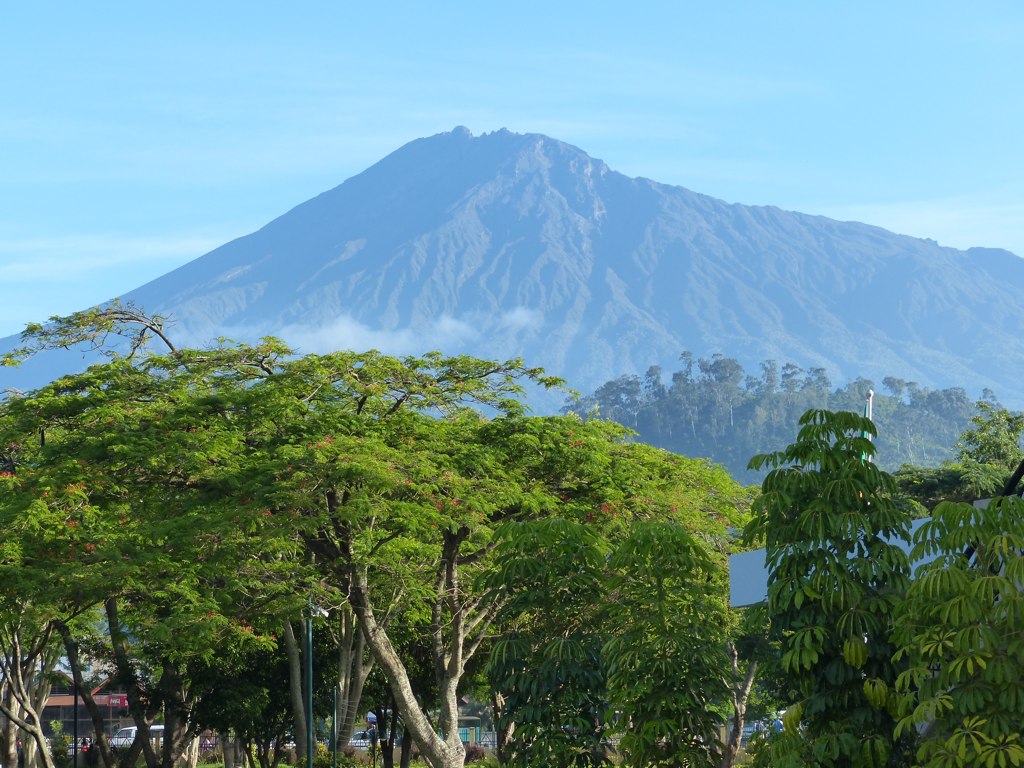
There are stunning views particularly of Kilimanjaro 60km away. From here it’s all downhill, literally! Surrounded by the drama and sheer beauty of Tanzania in the early morning light it is a stunning walk all the way back to where you started.
Find out more about trekking in Tanzania. Also check out our article about other East Africa trekking options.


