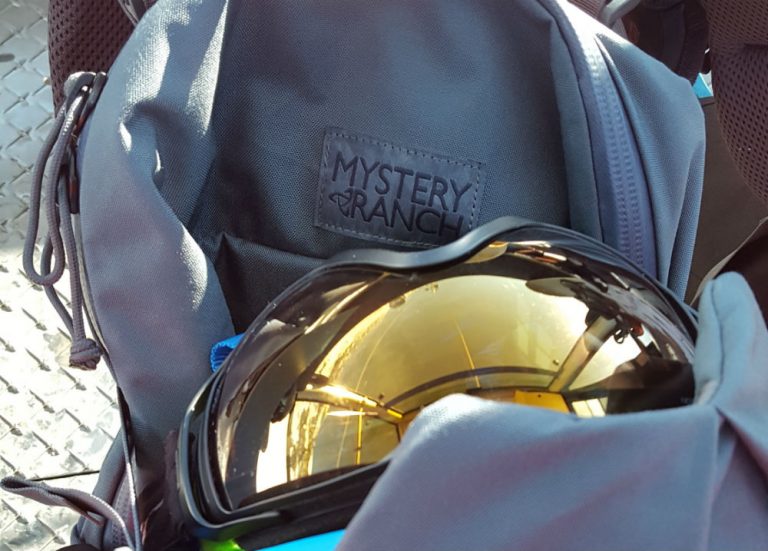
Ski goggles are an essential part of any skiers’ or snowboarders’ kit. A good set will shield your eyes from sun, wind and snow. However, because conditions can vary on the slopes different lenses are more suitable for certain conditions. So we’ve compiled this ski goggle lens guide to help you choose the right types of lens for the conditions.
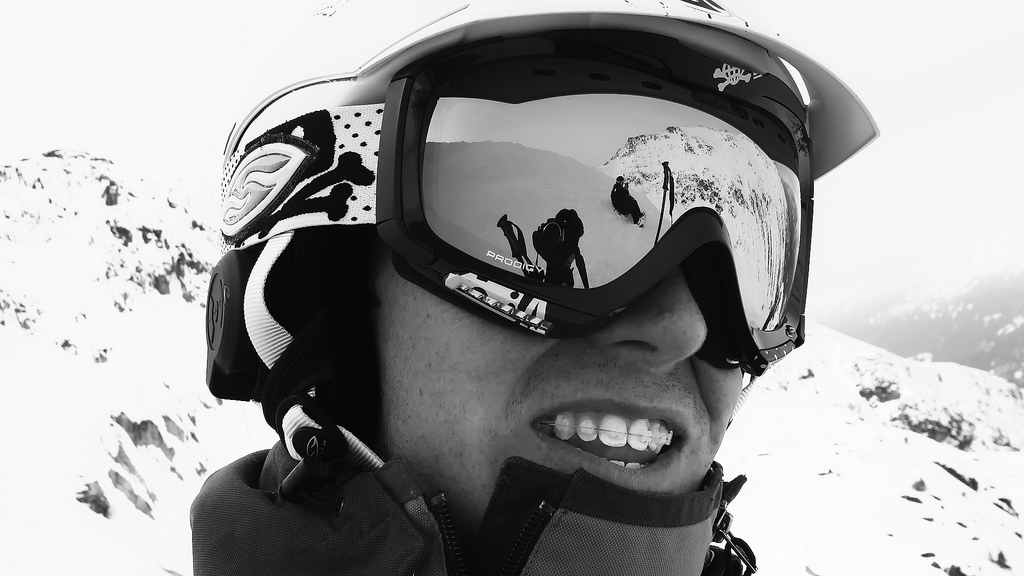
It’s important to point out that choosing lenses is not always clear cut. The availability of different colours, styles and materials mean that some lenses can cross over the condition types. Some are designed to be multi-purpose and others are condition specific. A good mid-range lens should be suitable most of the time but might not give you optimum performance on really bright days or in a white out. Choosing the right lens tint will prevent eye fatigue, boost colour and depth perception, as well as allowing the optimal amount of visible light transmission (VLT).
Skiing in bright and sunny conditions
In bright light it’s best to go for a darker tint on your goggles to limit the VLT. Copper, dark brown, dark grey and green tints help to reduce the amount of glare and UV that penetrates the lens. You might also want to try a mirrored lens which enhances the reflective power of the goggles.
These Dirty Dog Blizzard goggles are a great example of the type of darker lenses that work best on sunny days. The frameless style is sleek and has proved to be very popular with units selling fast. These darker tints also have a nice stylish element to them, looking good on bright days.

Mid light and variable – all round lens
As we mentioned above, mid-range lenses are the the most versatile and flexible, being suitable for most conditions. They work on bright days and when visibility is poorer. Mid-range lenses are a great choice if conditions are variable or if you only want to buy one pair of goggles. However you would struggle to see in a white-out, and even flat light may prove to be difficult.
The blue-green tint of these Oakley Airbrake googles has good VLT protection and is also good for colour definition.
Low light and poor visibility ski goggle lens
No one likes skiing in a white-out, but if you are only ski for a week a year you’ll probably go out whatever the conditions and the right goggle lens will make a huge difference. In low light, an amber, orange or yellow filters out the blue light. This makes shadows in the snow more visible and defined so you can spot bumps, undulations or a patch of ice – making it easier to ski.
Check out these Bollé Nova II goggles with their yellow lenses as a great option for poor visibility days. Lower light lens have higher VLT ratings but since you’ll only be using them when the sun is not glaring off the snow, it’s fine.

Ski goggle lenses for night skiing
If you’re planning on being on the slopes at sundown or enjoy night skiing or boarding, then a good clear lens option is worth having in your kit bag. Clear lenses have the highest VLT ratings as they allow the all the light to penetrate – perfect for when it’s dark out. But they still protect your eyes from the cold, flying snow, wind and .
The Dragon APXS goggles are a great night-time option or for use in fading light conditions.
Photochromic ski goggle lens
In addition to the above there are goggles with photochromic lenses. These are made from light sensitive materials that adapt to the light conditions to let the right amount of light through. This makes them a good fit for variable conditions or when you don’t have room to carry more than one pair. Although you will pay a premium for the privilege and it is often cheaper to have two pairs.

Hopefully this ski goggle lens guide will help you make a more informed choice about what lenses suit you. Personally I find that having a pair of low-light and a pair of mid-light (verging on high-light) goggles in my kit bag works for me, most of my friends do similar although some have interchangeable lenses so only one pair of goggle frames. If you are the kind of person that goes in as soon as the light gets bad then you can probably get away with one pair of mid-light goggles.