


The Snugpak Journey Solo reviewed here is a ‘bivi-tent’ but as the best one person tent for hiking will need to be small, it’s an obvious choice if you are backpacking or hiking alone. The tent sits somewhere between a hooped bivi bag and a one person tent. At this point the lines get a little blurred. Still, there has to be enough room for you to live and organise yourself. If there isn’t, there’s no point in carrying the extra weight; you could just opt for a bivibag instead.

Buying a one person tent for hiking
Realistically, unless you get to trial it, there’s no real a way of knowing if a tent ‘works’. So, when buying, reputation goes a long way. Now, despite not being as well known for its tents, Snugpak does have a bombproof reputation for outdoor gear.
Materials matter. If you’re after the best one person tent for hiking and are on a budget, you will find that two layer tents are your only option – and this isn’t a problem, as they can keep you just as dry. Modern fabrics, such as the 185t polyester used in the Snugpak Journey Solo reviewed here, will be lighter and ‘perform’ better – on the downside, they won’t be as breathable as oldskool designs that utilised cotton canvas, which also traps warm air really well. New to tents, you’ll find this guide to tent fabrics useful.
When you come to choose a tent you should probably start with key figures such as weight, pack size, and importantly take time to look at the internal dimensions. Now, while specific tent designs differ, the principles are largely the same: You can have a single shell (common in high-end versions) made from really expensive material (similar to what you’d find on a waterproof/ breathable jacket); or the more common, two layer approach – an inner tent and an outer protective shell. For the second one to work you need one thing: space between the inner and outer.
Your other option would be to go for a ‘hooped bivi’. This is a really basic development of the waterproof bivi bag, with hoops to keep it off your body and a tiny cover over your head. The Journey Solo is a similar shape, just larger, and uses an inner tent/outer tent design.
In many cases it’s going to be down to budget: the more you spend, the lighter the tents get. And while you’ll also get more durable designs, at close to £100 the Snugpak Journey Solo looks ideal for people trying solo hiking or trekking for the first time.
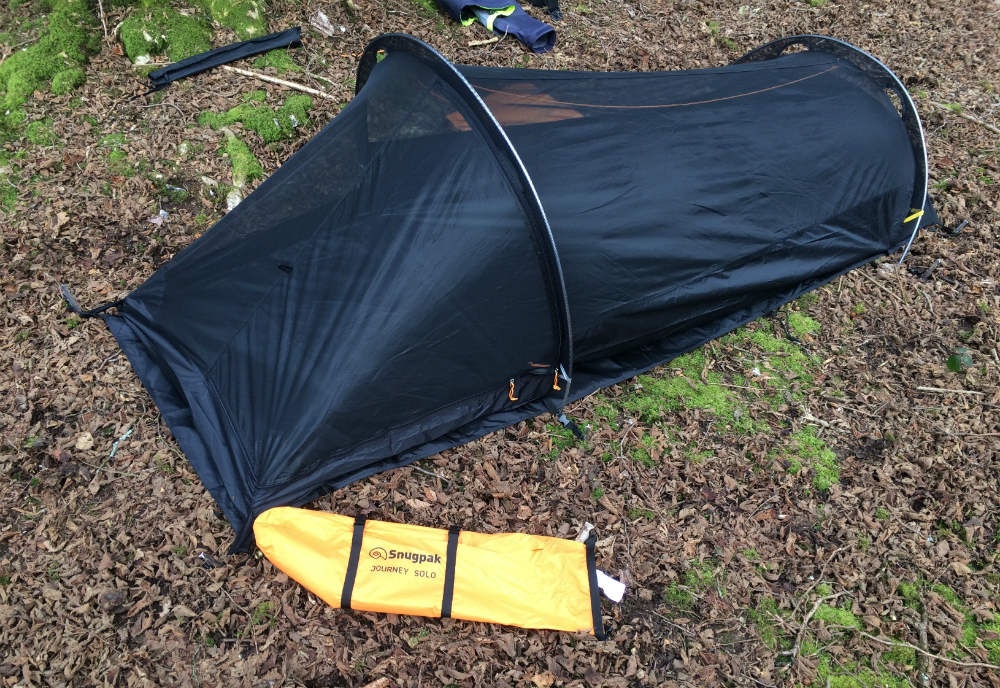
Snugpak Journey Solo reviewed: First impressions
Out of the box, the Snugpak Journey Solo is not that light at 1910g. But when you consider the price it’s not dissimilar to other options – and comes in cheaper than many of the hooped bivi-bags. The tent has three elements to it: a ‘bathtub’ (groundsheet), and the inner and outer (flysheet) shells – these all roll up with the pegs and poles into an excellent stuff sack with packed dimensions of approx 58cm x 13cm. There’s no missing the branding, which might be a put-off for some. But let’s face it, if you’re buying a ‘sunburst orange tent’ you probably won’t mind.
What I like about the Journey Solo
- Clever design gives plenty of room (for a bivi-tent)
- Awning has space for a small/ medium rucksack (just)
- Outer fabric is tough but light enough
- Waterproof, tidy taped seams
- Clever connection points
- Standalone ‘Summer’ option
What I don’t like about it
- Bathtub/ Groundsheet – this only works one way round.
- Tent pegs – designed without hooks, they are sharp on the hands when removing
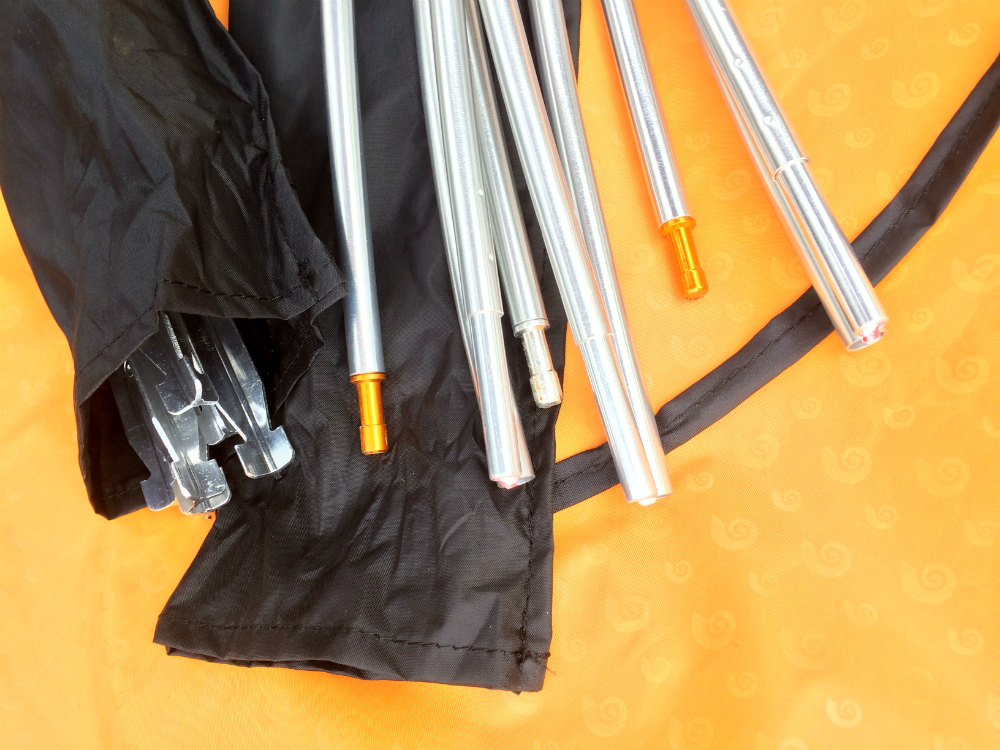
Material and tech-spec
- Flysheet Dimensions: 265cm(L) x 115cm(W) x 75cm(H)
- Flysheet Material:75d 185t polyester pu 4000mm F/R
- Inner Tent Dimensions: 240cm(L) x 100cm(W) x 70cm(H)
- Inner Tent: 190t Nylon with Polyester
- Waterproof taped seams
- Stuff Sack: 58cm x 13cm
- Weight: 1910g
If you are new to these ratings, briefly d = denier (thickness of the thread) and t = threads per inch. 4000mm is the waterproof rating (the minimum rating for a waterproof jacket would be 5,000mm).
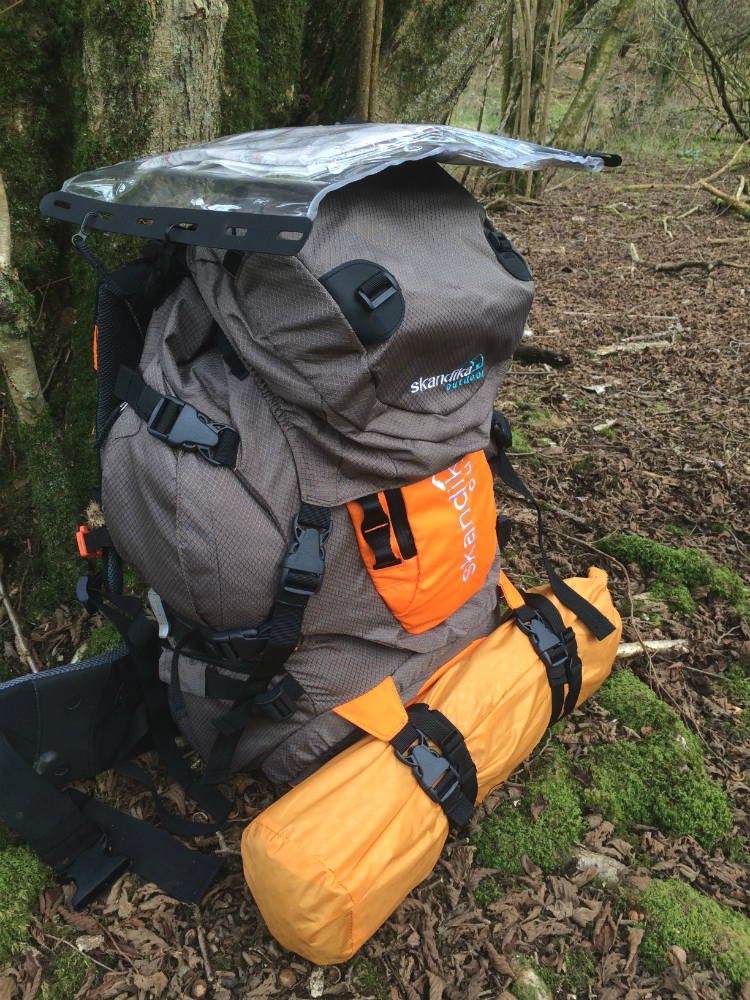
Using the Snugpak Journey Solo
From roll out to fully up took 12 minutes – and that was using the instructions. Taking down and packing away, around 8 mins. It’s easy to erect, the only confusion was with the bathtub, which provides extra waterproofing from the ground and throughout the front porch. Buying a one person tent for hiking you know you’ll be putting it up on your own and sometimes in awful weather. so simplicity of design and how easy it is to erect are both vital.
Set up is simple enough: bathtub down; inner down; poles in and then peg everything out; outer over the top and attach, then peg out the rest. I did lay the bathtub the wrong way and needed to move it all around, other than that it was a cinch. For a steer, this how to put up a tent guide is useful, but when it comes to it all tents go up differently, and if anything it’s more common to put the outer tent up first.
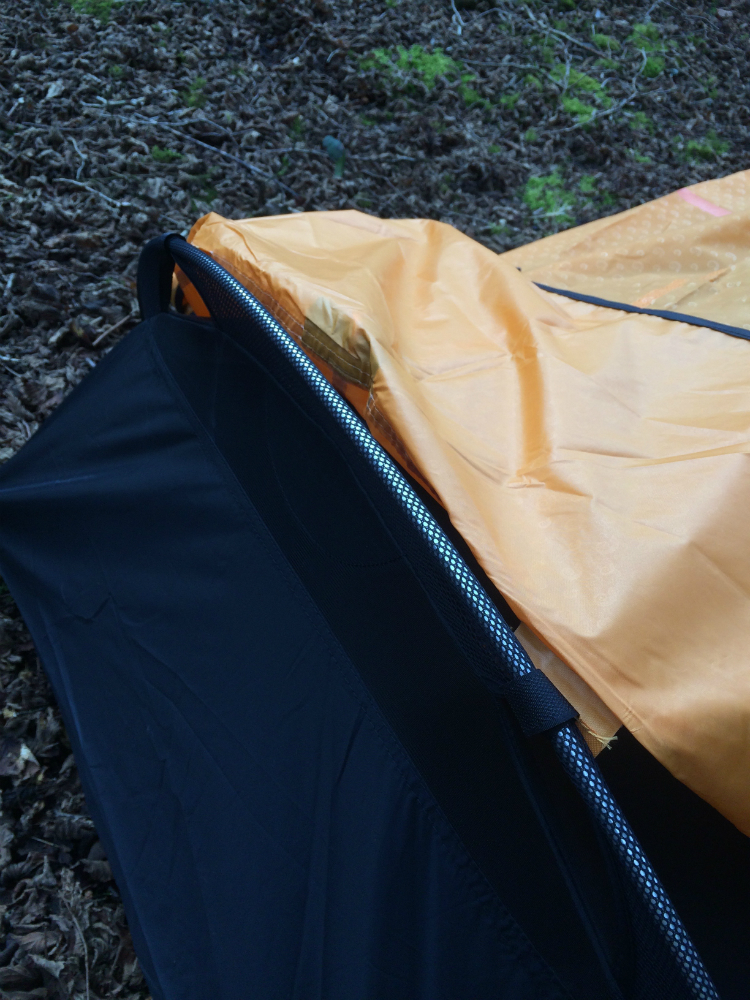
Connecting the flysheet (outer tent) to the inner was straightforward, thanks to clever use of velcro ties and buckles, although I’d want a few of these spare just in case. Access is from the side awning that opens up into the main compartment. There’s an inside compression line and further external guy ropes to hammer down ahead of worse weather. Should it turn nasty I’d be rigorous about getting these in place; perhaps an extra pair running off the small hoop would be a helpful improvement?
The best one person tent for hiking has to have sufficient space without feeling claustrophobic, and the Journey Solo’s breathing vents helped filter out some of the inevitable smelly hiking honk. It’s a touch tight with all your kit inside, but make space of the available room in the awning and it’ll work for a night’s camping. With it being small I found that I did most of my admin outside, as there’s barely enough room for the vitals of changing boots or running a stove. As a solution you can pull your rucksack into the main compartment – which is wide enough at 100cm – roll back the bathtub and set your stove on the ground (with the awning zipper open for ventilation).
In better weather you’ve the option is to use the inner tent just as a summer mosquito shelter. However, personally I’d prefer it the other way round: to be able to use the outer as a shelter. This would help double up the usefulness and give users a lightweight option, somewhere between a bivi and a tarp. Maybe it’s possible to ‘hack’ the design, but the restriction is that the poles feed through the inner, not the outer section.

A night of rain did little to dampen the spirits of this tiny tent. Water pearled neatly off the outer fabric and at no point did I feel vulnerable. Getting used to a smaller tent takes a little time; there’s a little claustrophobia at first and you really need to be tidy with your admin. Get your head around this, and that it’s a place to crash not to entertain, and the Snugpak Journey Solo reviewed here can work well for you
The best one person tent for hiking?
I’m not sure that something so small could ever be considered the best one person tent for hiking. For me there needs to be more space. To do this we are talking either more weight (not great) or considerably more money. However, as a quality, budget one person bivi tent, the Snugpak Journey Solo fits the bill. I really appreciated being able to keep my medium-sized rucksack inside, not an option with most hooped bivis, and it’s spacious enough for what I’ll use it for. And there’s no reason to keep this tent just for hiking: I’m sure it will find its way onto my panniers this summer, too!
The Solo from Snugpak is the smallest of the company’s new Journey tents, which include ‘Duo’ , ‘Trio’ and ‘Quad’ sizes. The tent retails at £109 and you can learn more about it over on the Snugpak website.


