

I once heard a story of a blind man in Cornwall whose assistance dog ran off so he found his way home one evening by using the warmth of the sun on his face. Well it got me thinking: “How do blind people navigate when outdoors?”

Fast forward to today and a recent Twitter chat with former Scout and blind athlete Eric Oyen revealed there are a few ways visually impaired and blind people can navigate – and there are braille compasses,too.
Interview with Eric Oyen
Incredible. Lots of sighted people are awful at using a map and compass: Without practice I’m one of them! So how do they do it? Here’s my questions to Eric, his insightful answers and some aids you can use if you are blind or visually impaired.
How did you learn to navigate?
Well, I learned when I was still sighted back in the Boy Scouts. Those skills translated rather well after I became blind: I use some of the usual indicators of direction, like the sun on my face, etc. It’s actually fairly easy when you think about it: Knowing the time of day and whether or not you are in a clear area to perceive the sun is a big help.
What’s it like to use a braille compass?
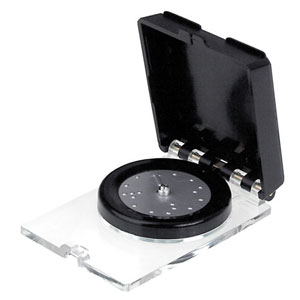
Well, it’s certainly a bit different from a typical clear glass needle floating in the liquid type. Firstly, you have to close the lid in order to release the compass plate and let it settle. Then open the lid without changing position and then feel for the long raised line which indicates north.
Sighted people find navigating difficult, what’s the biggest challenge for you?
Biggest challenge for me is trying to avoid low flying branches out in the woods. Second biggest challenge is if I don’t have a clearly defined trail that I can feel underfoot.
Are there any technological solutions you know that help?
Yeah, assuming that there is sufficient battery power. The iPhone has an excellent GPS unit, but it has one big bad drawback: If you don’t have sufficient signal from the cell service, the GPS won’t function. That’s a big design flaw I found in the iPhone.
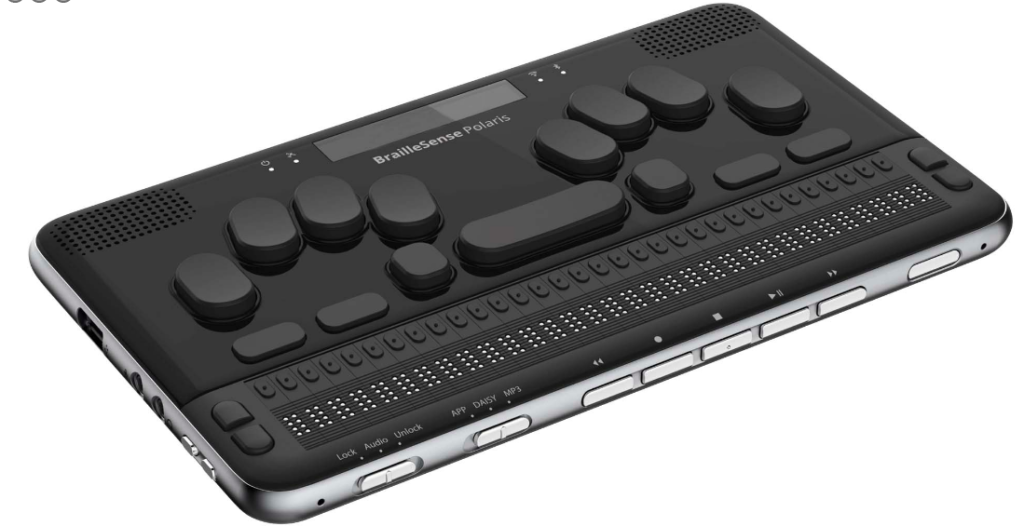
Otherwise, with my braille notetaker and an external bluetooth GPS device (from Sendaro), I can get a reasonably accurate fix on my position. Also, as a licensed ham radio operator, I can also call for directions if I am in range of a repeater. Couple the braille device with a ham radio and I can never be lost!
(If you’re interested here’s a list of GPS software for visually impaired users)
What advice would you have for anyone partially sighted or blind keen to get outdoors more?
Best advice I can offer, join a local hiking club or get on a meetup to find folks in your area. Also, join a local mountaineering club, cycling club or any other outdoors clubs. Oh, and don’t take no for an answer.
How important was Scouting for you growing up?
Actually, it was very important, although I never realised it at the time. A lot of their activities at the troop level appeared to be geared more toward teamwork and outdoors activities, but that is probably one of the better vehicles for teaching outdoor safety, good camping skills and also how not to get lost.
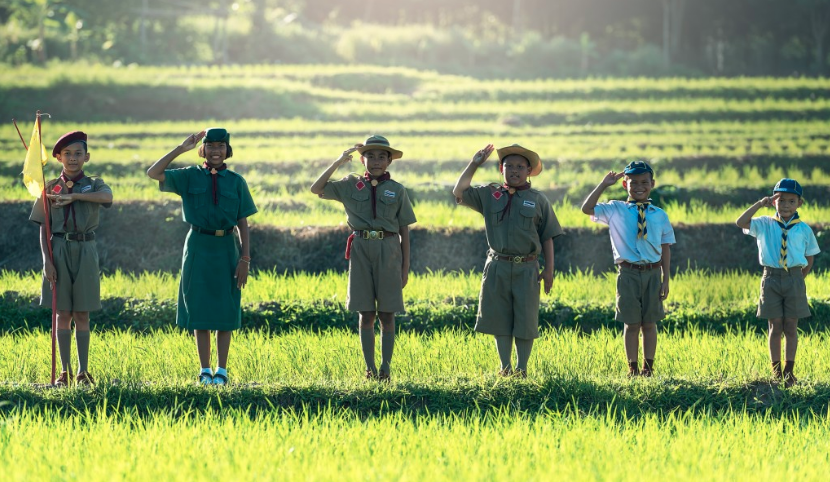
Mind you, this was back when I still had full eyesight. One of the things taught during all the camp outs was using the compass and a survey map to navigate the area. After I became blind at age 23 (due to an accident that I won’t detail here), I acquired a braille compass and relearned how to navigate using the city scape here as a starting point. So, those skills learned in the Boy Scouts turned out to be very handy indeed.
Any plans for a trip coming up where you’d be navigating?
I’d like to say yes, but I can’t. The reason is that I lack sufficient funds for any kind of outing. Also, I don’t have anyone I can tap to take with me on a trip of this type. So, I am stuck at home.
Hey, anyone living near Eric in southwest Phoenix near the Tolleson/Avondale corner boundary fancy helping him get out on an adventure? I know he’s looking for a tandem pilot. Get following him on Twitter @N7ZZT or share this post with people you know.
Innovations that help blind people navigate
Here is a little more detail of the innovations used by blind and partially sighted people, some more recognisable than others. Here are some examples:
Braille and Directional Tactile Compass
Similar in shape to the compass you’d recognise however they commonly use raised dots to indicate east, south and west with a separate raised dot to identify the north arrow – there are also incremental raised dots for each 30 degrees. Manufacturers include Brunton and Bradley – the compass at the start of this post is a Brunton Braille Compass Nexus 16B
Digital Talking Compass
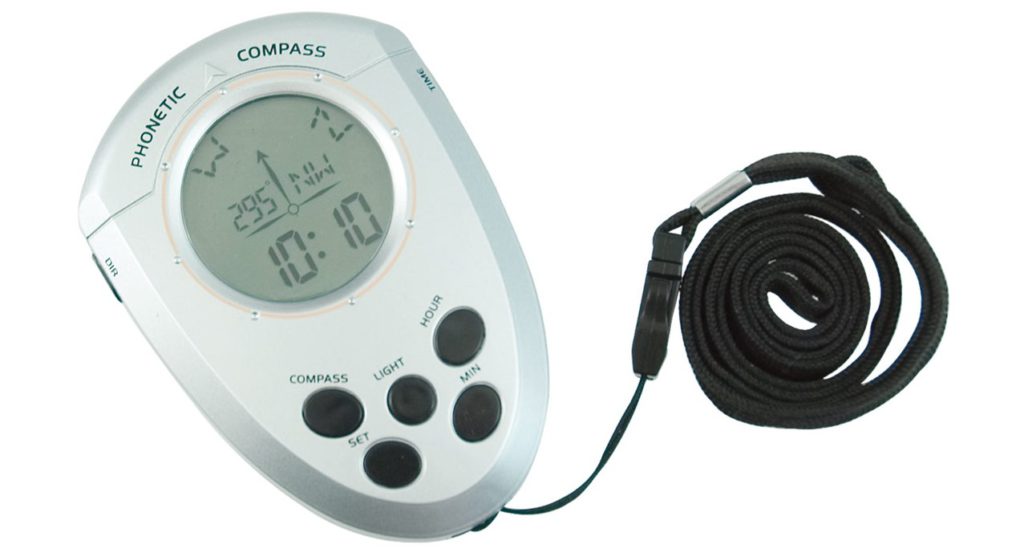
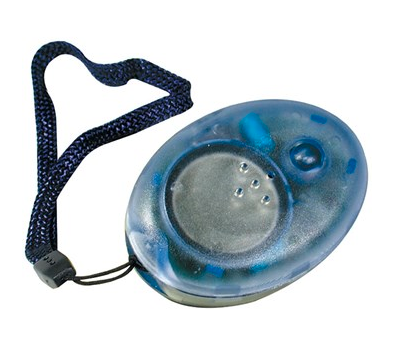
These look more like step counters than analogue compasses. Some feature enlarged digital displays and they will read out your general direction with major and minor compass points.
The model featured here is by Australian company Reizen compass who claim they can be ideal to navigate in the bush – not just for people who are sight impaired or hard of hearing.
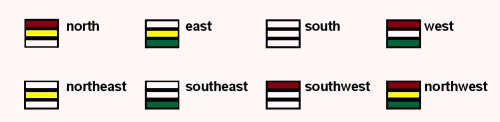
There is also the C2 Talking Compass from Sensory Tools which can be customised with two languages and uses an interesting colour co-ordinated display to help if you are visually impaired.
Innovations old and new
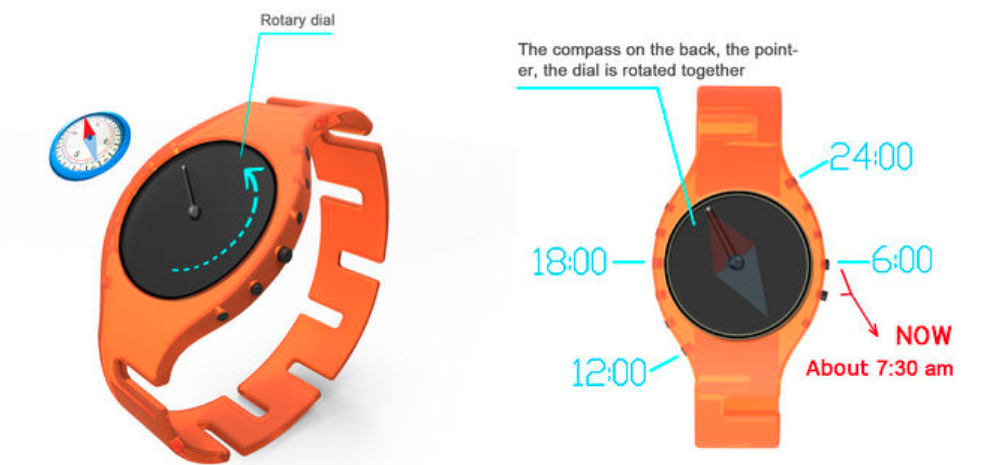
I found a fascinating braille compass watch which may have been hand made by Melville Alexander, and a very new e-compass design from the Wuhan University of Technology.
The e-compass looks more like a Swatch but with a compass on the back and was an entry in the IF World Design Guide competition but perhaps remained only a prototype. I’ll see if I can find out more.
Learning to navigate in the Scouts
A quick ask around the team and all of us have been involved either with Scouts or Adventure Scouts. Navigation is just one of the outdoor skills we picked up and as organisations go, they had a huge positive impact on our lives growing up. Scouting is truly international and we’ve included links below if you’re interested in getting involved. There’s also our introduction here to using a map and compass to find your way if you are sighted.
I hope you found this article asking “How do blind people navigate when outdoors?” as interesting as I did. A big thanks to Eric for giving us his time and insight. Check below for scouting organisations and charities that help support partially sighted and blind people.
Royal National Institute of Blind People


hey! I remember this interview. SInce that time, I have gotten some help from the local hiking community. I try to go out on hikes monthly, but with COVID, it’s been hard to get any action going.
ANyway, still use the braille compass and have managed to pair the sendaro GPS reciever with my newer iphone, so cell service isn’t any problem now. anyway, glad to see the story being posted on twitter again.
Hi Eric,
great to hear you are in touch with people locally and get out on the trails when you can. Was a pleasure to get your insight and advice to share with others – always happy to help if we can.
Best wishes from everyone here!
Just to second what Mark said it was an interesting article and a pleasure to share the information. Glad you get out on the trail a bit – I am sure we’d all like to do it more often!!