

Scuba diving is an incredible experience but it is not without its dangers. Which is why pre dive safety checks of all your dive gear are an integral part of scuba diving.

Diving body PADI has outlined the essential pre dive safety checks that any diver, no matter how experienced, should always carry out before they dive. PADI also stress the importance of this being a buddy system, so that both you and your dive buddy double check each others equipment just before you get in the water.
Pre dive safety checks ensure equipment is working correctly and also allows you to familiarise yourself with your buddy’s gear should any assistance be needed. The fact that many diving accidents are preventable by simply following these checks correctly should tell you everything you need to know about how important they are.
The PADI pre dive safety checks can be remembered easily using the acronym ‘BWRAF’, with the suggested PADI mnemonic of Begin With Review And Friend. If this doesn’t stick in your memory, maybe the mnemonic ‘breathing water really ain’t fun’ might.

B for BCD/buoyancy
Check the inflator and deflator work and that the BCD inflates or deflates accordingly. Use the manual/oral inflator to ensure the BCD will inflate if you are out of air. It is also good to completely empty the BCD by checking any ‘dump valves’. Ensure straps are flat and have no slack.
W for weights
Ensure the weight belt is fastened properly with the loose end tied correctly for quick release. It’s also important to ensure you are familiar with any different models of weight belt your buddy might be using and in particular quick release methods.
R for releases
Locate, check, familiarise and count all your buddies releases and clips. This will save time in an emergency especially as many BCDs have clips etc in different places. Don’t forget to check the tank strap and clip by placing one hand on the bottom of the tank and the other on the first stage regulator and trying to move the tank up and down to see if the strap moves.
A for air
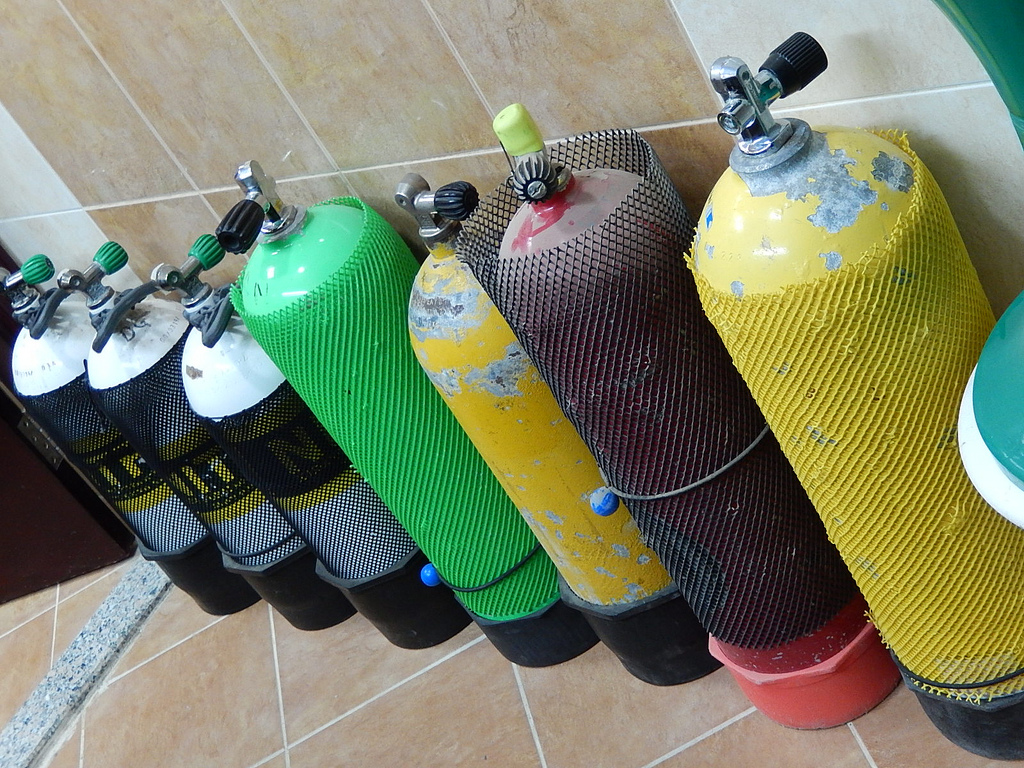
The air should be turned on all the way and a quarter turn back. Take a couple of breaths to check the air is fresh and dry and does not taste funny. Using both the primary and back up regulators take a breath while watching the pressure gauge for sudden drops and check the purge does not free flow. Examine the connectors and hoses for damage or leaks and that the back up regulator is within easy access in the triangle from the chin to the base of the ribs. Any alternative air sources should also be checked at this point.
F for final OK
One last inspection is required to complete the check that everything looks tidy and in the correct configuration and that hoses are not likely to snag on anything. Check you have fins, masks and snorkel and that any specialist kit for the dive such as torch, knife, camera etc is working and securely fastened in its correct place.
All other dive qualifications have similar pre dive safety checks for example BAR from the British Sub-Aqua Club (BSAC) which stands for Buoyancy, Air and Releases.
As we have mentioned, you should conduct all of these pre dive safety checks on your own equipment and then you and your buddy repeat them on each others equipment to make sure nothing has been missed. Stay safe and you will enjoy your dive and many more dives for years to come.


Air should always be turned on all the way! (Don’t turn it a quarter turn back)
I know your diving instructor told you to do that (and his diving instructor told him to do that) but we don’t need to do it any more.
In the 60s, tank valves would stick so you couldn’t close it if you opened it all the way so you needed to go a quarter turn back or you would be able to turn it off without emptying the tank.
These days, there’s a Teflon washer in the valve that solves the problem so you can open the tank all the way and still close it easily after the dive.
The practice of turning a quarter turn back allows people to accidentally turn a tank all the way off and then a quarter turn on – this is dangerous as it will give you gas at the surface but potentially not underwater and has caused a number of incidents.