

When you’re setting up a paraglider, the ‘don’ts’ are often as important as the ‘dos’. That’s why its important to familiarise yourself with our paragliding launch guide before you go. If you’re a newer pilot, here are the six most important things to put on your ‘never-will-I-ever’ list for launching.

Paragliding launch guide
Get a grip on these six key points in and you’ll be sure to experience safer and more enjoyable launches.
1. Don’t go first (but don’t go last, either)
If you’re a newer pilot, take your time. Let a couple of pilots – ideally, experienced ones – launch ahead of you, so you can use their launches and early flights to evaluate the conditions.
- Are they heading straight for a ‘house thermal’ after launch?
- Where else are they finding initial lift?
- Are they taking a left-hand or right-hand path off launch?
- Was it a struggle for them to pick up and/or navigate their wing to flight? If so, can you identify the issue they worked through?
Don’t go last, either. As a newer pilot, you should ask an experienced pilot to stay with you so you’re not left at launch on your own. Don’t be bashful: you may have questions about changing conditions or require a bit of launch coaching to successfully begin your flight. Most experienced pilots will be more than happy to help you out.
2. Don’t lose track of the weather
Take a mental snapshot of the weather conditions when you arrive. As you unpack, set up and check out the other launches to determine if there have been changes. Are the grey clouds getting darker? Are there rainshowers streaking the skies in the distance? Are the trees starting to shake with wind? If you can see water below, are whitecaps forming? Learn the ‘red flags’ for your site and – if you see even one – stay on the ground.
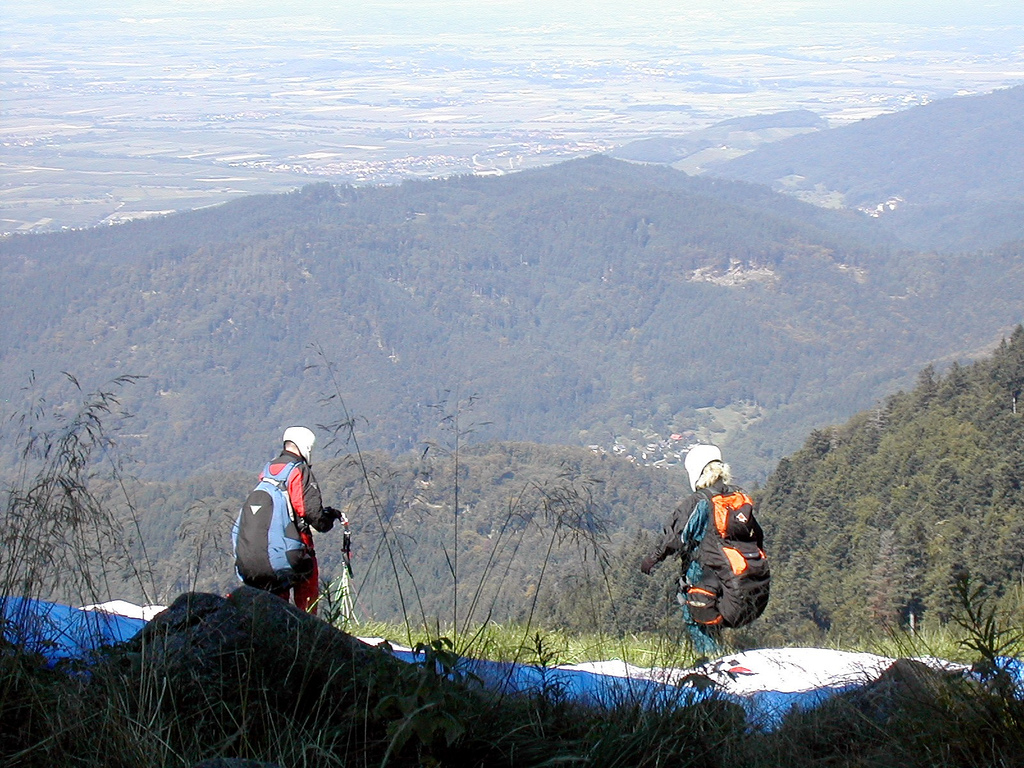
3. Don’t ignore big differentials
Keep an eye on the winds, as the wind cycles at launch can give you ample warning of the turbulence waiting beyond. As a rule, if the wind varies by more than 6 mph during a three-second period, the air out there is problematically turbulent.
Opinions vary, but for the purposes of this paragliding launch guide for newer pilots: if the consistent wind speed picks up above 12 mph, conditions are starting to move out of your safety margin. Do yourself a favor and don’t launch.
4. Don’t forget to check your wing
Check the security of your carabiners before you step into the harness, as a ‘biner loosened in transport could bring your flying career to a very abrupt halt.
Once you’re snugly inside and before you commit to a launch, check that your A lines are clear then bring your wing smoothly overhead and inspect it for riser twists and knots. Only commit to a launch when you’re sure you’re securely connected to a good wing, no matter how rushed you feel.
5. Don’t struggle into the harness immediately after launch
The moment just after launch and before flight is very sensitive. You’re still close to the ground, you’re in a physically awkward position and you’re likely to experience dynamic air. To set yourself up for success, loop one leg under your stirrup (not your speedbar) and use that leg to push the stirrup within easy reach of the other foot just after launch.
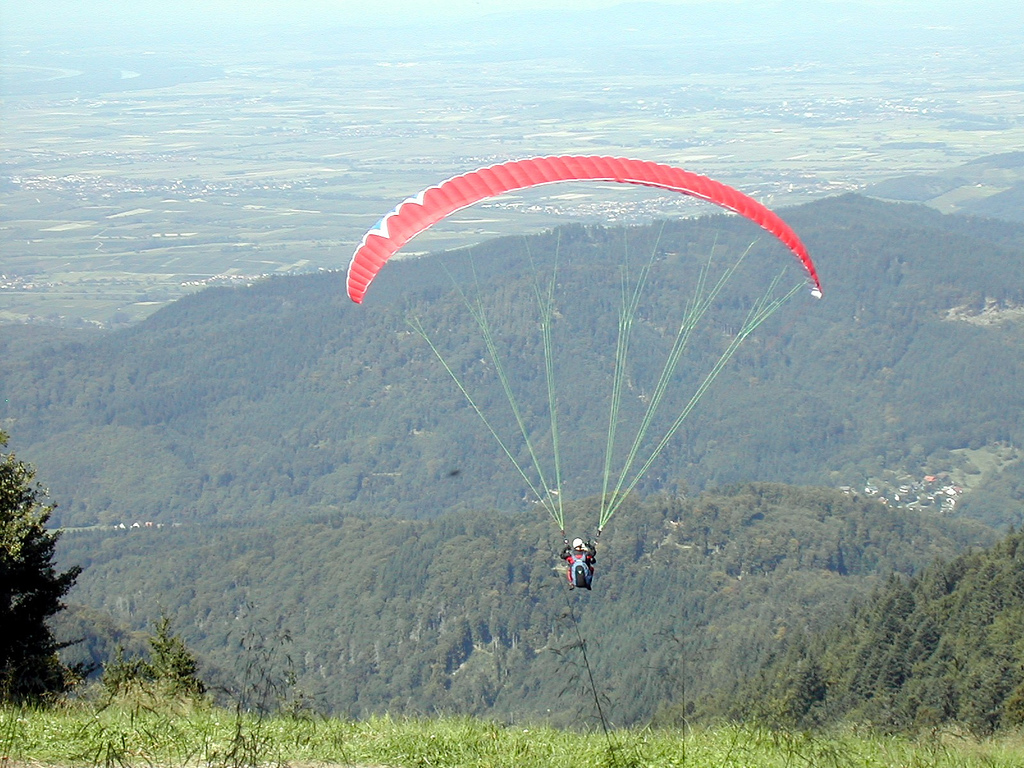
If you don’t smoothly enter the harness after launch, don’t fight it. Don’t kick around, looking for the stirrup (as you may accidentally pull speedbar). Don’t let go of the brakes – or pass both brakes into one hand – so you can fish around for the stirrup (as you’ll be painfully off-guard to correct a surprise collapse). Definitely don’t be one of ‘those pilots’ who keep the brakes in their hands and paw around below their harnesses while their wing goes crazy overhead.
6. Don’t cave to the pressure to take off
No paragliding launch guide would be complete without this earnest entreaty: if you’re not ‘feeling it’, do not launch.
When a launch gets crowded, pilots have an unnerving tendency to shelve safety in favor of ego. Especially when the conditions are challenging (and the tandems are stacking up behind solos, making grumpy sounds), the pressure to do it right first time can be nail-bitingly high. It feels like everybody’s watching you struggle. They’re not, trust us: they’re more worried about themselves.
Even if you’re at a lonely launch, the pressure to take off can push your decision-making in the wrong direction. Perhaps you hiked for a while to get there, or it’s getting dark, or you can see weather moving in, or you don’t have a ride back down, or it’s the last day of your holiday.

Stop the chatter in its tracks. Nobody will think less of you for folding up your wing and calling it a day (and you might just save your own life). So, there’s our paragliding launch guide to the 6 things you should never do – stick to it, and your training, and you will be launching safely.


